Showing posts with label cisgender. Show all posts

Tuesday, November 10, 2015

Frustrated Trans-Person/Student Rant


When will school faculty stop thinking they know how I identify better than I do? I understand what your paperwork says. I understand what you see, and that I may not be the most picture-perfect example of what you expect a "guy" to be. But what gives you the right to say that you see is more important than what I /know/ and live with every day?
I don't give a shit what you believe. If you think my identity is something to be shameful of, then that's your opinion and I respect it. All I ask for is the same respect, like not deliberately using my birth name or wrong pronouns continuously in a CLASSROOM where people don't all know I'm trans. This is not a battle to be held when you're in a position of power over me.
When you continue to out me in front of people who may or may not have known my assigned sex at birth, that not only destroys my self confidence and shows me that you don't care about respecting your students with the same respect you ask for, but it potentially puts me in danger - and as someone who is supposed to be a positive figure for their students that's not okay.
Rant over. <3

My tattoo, it reads "The Floor Is Hard, Not Unforgiving".
A constant reminder to myself to stay strong, and that nothing that is negative is worth submitting to.
Any obstacle can be overcome, you just need to be around to do it.


Tuesday, October 27, 2015

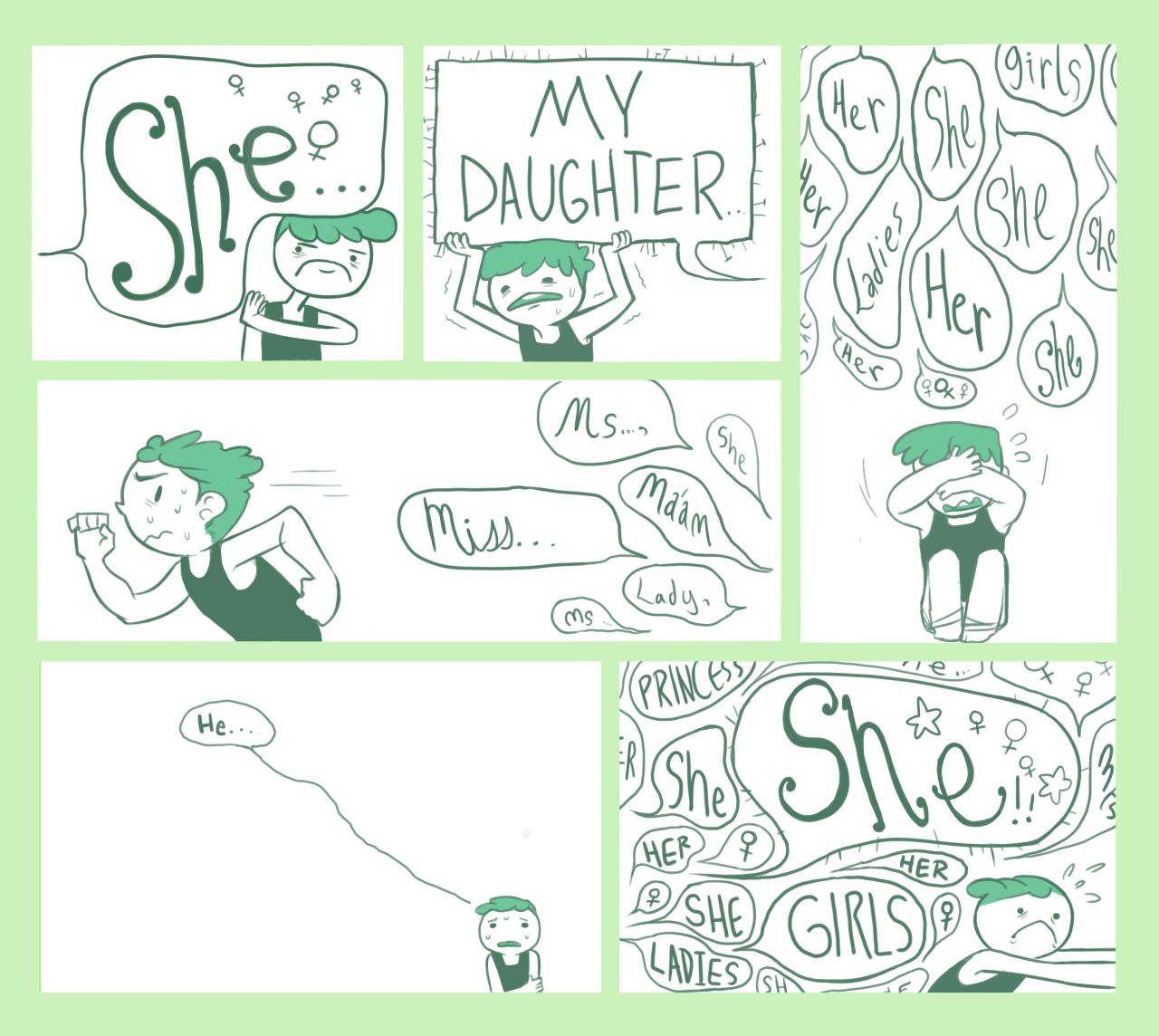
Misgendering: What it is and Why it Matters.

Content Warning: Misgendering.
If you are bothered by the mention of misgendering, please read with caution.


I have defined misgendering on this blog as:

"To invalidate someone's gender; Usually by referring to them by an incorrect gender, incorrect pronouns, or a birth name."

Photo Credit: Sacha

Misgendering is really a very broad topic because it can be done in so many ways, and is likely to effect everyone differently. What one person is offended by may not offend the next and vice versa.

 Someone may be okay with being misgendered in certain situations,
like if they're not out to everyone and don't wish to be...

...While others aren't okay with it under any circumstances.
(This is pretty typical - but it's always best to ask if you're unsure!)

Misgendering can include:

  •  Not using someone's correct pronouns.
  •  Referring to a person with a gender they do not identify as (such as the sex they were assigned at birth.)
  •  Calling someone by their birth name when they have asked to be called something different
  • Asking someone what their "real name" or "real gender" was upon finding out they are transgender.
  • Telling someone their pronouns or gender identity "do not exist" 

Fun fact, not only transgender people are effected by misgendering either...

That cisgender boy on your softball team that everyone jokingly refers to as a girl because he can't pitch as well as the others?

Yep, he's being misgendered.

That girl with the short hair who wears boy clothes and is constantly referred to in a masculine way even though she identifies as female?

Her too. 

Photo Credit: House of Juan


So now on to the big question:

Why does this matter?

If you have siblings, think of this scenario.
*If not, try thinking of a cousin, a parents' sibling, housemate, etc, in place of a sibling:

Have you ever been called by your siblings' name by accident? Of course you have. Because parents are people and make mistakes like the rest of us. 

So your parent calls you by the wrong name and you probably laugh and remind them what name is yours. They probably laugh with you and might say sorry and call you by the correct name this time.

But then it happens again. No big deal...until it happens a third time, and a fourth, and a fifth...

 Your parent is addressing you but keeps using your siblings name instead. At first it was no big deal, but now it's getting annoying. You correct them again, but this time - nothing. They don't laugh, they don't apologize. They just keep doing it like they can't hear you.

Then it spreads. Now it's not just your parent calling you by your siblings name but your classmates, co-workers, other family members, the teller at the bank. No matter how many people you correct, it makes no difference. Everyone is completely set on referring to you by your siblings name.

Some people just ignore you when you correct them. Some stare you up and down like you're a space alien and say "No, your name is..." and insert your siblings' name where your name should be. They start talking to you about all these things your sibling likes that you couldn't give a crap about. When you try to talk about your interests and what you like, they ignore it. They insist they know who you are and what you like to talk about.

 You can't fight it. The more you do and the more angry you get, the more persistent people are on telling you you're wrong. If you get angry, they get angry back. This doesn't just happen for a day. This happens for days, weeks, months, years...for the rest of your life.

You KNOW what your name is, and you know that is who you are. 
You have your own identity. 
But that identity doesn't matter to anybody but you anymore. 
Everyone you meet tells you they know you better than you do.

Think about how you would feel. 
Unheard? Misunderstood? Invalidated? Frustrated?
 Like your feelings don't matter? Like people don't know who you are anymore? 
Unimportant? Irrelevant? Hopeless? Confused? Hurt?

By now, I hope you see the connection. Nobody knows you better than you do, but when someone is misgendered it's telling them the opposite. It's telling them that their gender identity doesn't matter. It's telling them that they can only be who you want them to be, not who they are. Not only is it rude and disrespectful, it's mentally draining. It hurts. It's creating a world where people are not safe being themselves.

--------------------------------------------------------------------------------------------------------------------------

Out: A term used for someone who has already "come out" about how they identify in the LGBTQIA+ community.

Pronouns: A replacement for nouns and noun phrases (He, they, ze, you, etc)

Birth Name: The name someone is given at birth.

Transgender: Someone whose gender identity does not align with the sex they were assigned at birth.

Gender Identity: A person's personal perception of their own gender

Cisgender: Someone whose gender identity does align with the sex they were assigned at birth.


Sunday, October 25, 2015

Being Misgendered

Content Warning: Misgendering.
If you are bothered by talk of being misgendered, please read with caution.


Photo Credit: Sleepyllama


The other day at work I walked in and was greeted by the few of my co-workers that were hanging around like normal. About five minutes into my shift I got a phone call from one of them who wanted to apologize to me for apparently saying "Hey girl!" when she greeted me. Truthfully, I was so tuned in to what I was doing that oddly enough, I didn't even notice what she said. I just took it as any other greeting, said "Hey!" back, and continued on with what I was doing.

This was a rare occurrence in many ways. For one thing, it's not very often I don't notice being misgendered. Even though it's something that happens to me multiple times on a daily basis, it's still one of the worst things I've ever experienced. For me, the  feeling is somewhere between being punched in the gut really hard and realizing I've shown up to school naked. It hurts, it's embarrassing, and it makes me feel exposed and invalidated. It's something I will never get used to, no matter how many times I've lied and told people that I am used to it.

But the thing that really stuck out to me was how my co-worker reacted to what she did. I've received a lot of different reactions when someone misgenders me. Most people don't even realize what they've done, and upon being corrected give me a look like I've just spoken to them in that Ubbi Dubbi language that PBS made up for Zoom back in the 90's.

 A good majority of those people still continue to do it even after being corrected. Some act like I've just told them I'm secretly an alien life-form sent to Earth to scope out the lifestyle, and continue the conversation wide-eyed with things like "Really?!" or "Prove it!". Others act like they've just triggered a bomb that's going to go off in exactly 30 seconds if they don't do everything in their power to make a big deal over their mistake.

I really appreciated the way my co-worker corrected her mistake. Without making a huge deal of it, she apologized, explained why she was doing so and that she understands she made a mistake, listened to me say thanks, and moved on. It was simple, it was calm, and most importantly it was incredibly nice to hear.
--------------------------------------------------------------------------------------------------------------------------

Misgender: To invalidate someone's gender; Usually by referring to someone by an incorrect gender, incorrect pronouns, or a birth name.


Tuesday, October 20, 2015

Nobody's Perfect...

Photo Credit: Allmyroads

I've realized now as I've gone back through some of my old posts that there are a few places where I have messed up or said some things that are not politically correct. Yes, it's true - I don't know everything (regardless of what my mother thinks).

 One of my favorite things about the ever growing knowledge of gender identity and sexuality is that people are always finding better ways to include everyone and better ways to define things. I actually really like finding out new or more appropriate ways to talk about these things. I think that with knowledge comes power, and the better we get at talking about these topics appropriately the better the community gets. So, with that being said - here's some corrections, and some revisions to terms that I will be sticking with from now on:

LGBTQA+ is now being written as LGBTQIA+, with the added I to include intersex. Also, there were a few posts in the beginning where I failed to note that the Q stands for both questioning and queer. I have since corrected it, but I thought I should bring attention to it anyways.

I have always been on the side that the term 'biological sex' is not offensive, but an article I recently found online (which I am now having trouble tracking down, but I will edit/add in here when I find it) proved me otherwise. From now on, I will be using the term 'sex assigned at birth' instead, or AMAB and AFAB.

^ Which also tweaks the definition of transgender that I have been using on here. From now on, I will be defining the word transgender as "someone whose gender identity does not align with the sex they were assigned at birth".

^ This also changes my definition of cisgender to "someone whose gender identity does align with their sex assigned at birth".

The definition I've been using for sexuality is also changing. This article I stumbled across made a very good point about why the term 'sexual preference' is politically incorrect. So, out with that phrase - and now the definition for these words will simply be "A person's sexual orientation or capacity for sexual feelings.

I'm also changing my definition for genderfluid, as I feel like the original one I came up with just didn't seem right. And of course I want to do my own label justice. From now on, my definition for genderfluid will be "someone whose gender identity fluctuates between two or more points on the gender identity spectrum".

Also, this one's not specifically LGBTQAI+ related, but in past posts I have used the term "trigger warning" to express that what I'm posting may be triggering to some people. I have since learned that the term "trigger warning" is no longer deemed appropriate, and that "content warning" is the more appropriate term. So I will be using that term from this point on if I ever need to again, and will be tagging all needed information with 'cw' instead of 'tw'.
--------------------------------------------------------------------------------------------------------------------------
Gender Identity: A person's personal perception of their own gender

LGBTQIA+: Lesbian, gay, bisexual, transgender, queer, questioning, intersex, asexual, plus

Intersex: Someone who is born with sexual anatomy that does not fit within one label of male or female.

Questioning: Someone who is unsure of their sexuality or gender identity

Queer: An in-group term sometimes used to refer to the entire LGBTQIA+ community, or certain people within the community who define themselves that way

AMAB: Assigned Male at Birth; someone who is born with male sexual anatomy and was originally assigned that label at birth

AFAB: Assigned Female at Birth; someone who is born with female sexual anatomy and was originally assigned that label at birth


Tuesday, October 13, 2015

Power in Numbers

This post mentions harassment, assault, homophobia, homelessness, invalidation due to gender and sexuality, mental illness, cyberbullying, murder, racism, and suicide. If you are bothered by any of these things, please read with caution.
Photo Credit: Ashley Underwood


The 2nd most common reason for bullying in schools is a students' gender identity, sexuality, or sexual/gender expression. (GLSEN)

Almost 75% of LGBTQA+ students have been verbally harassed because of their sexuality, and almost a quarter for their gender identity. (GLAAD)

Over 15% of LTBTQA+ students have been victims of physical assault because of their sexuality, and over 10% for their gender identity, (GLAAD)


...these can be compared to only 27.3% of non-LGBTQA+ students being bullied or harassed either physically or verbally at school. (National Center for Educational Statistics)


Over 60% of LGBTQA+ students who have reported bullying in school said no action was taken by school staff. (GLAAD)

Over half of LGBTQA+ students say they feel unsafe at school because of their sexuality, and nearly 40% because of their gender identity. (GLAAD)

32% have skipped school to avoid bullying. (GLSEN)

28% drop out of school altogether because of bullying. (Stop Bullying)

But it doesn't always end at school...


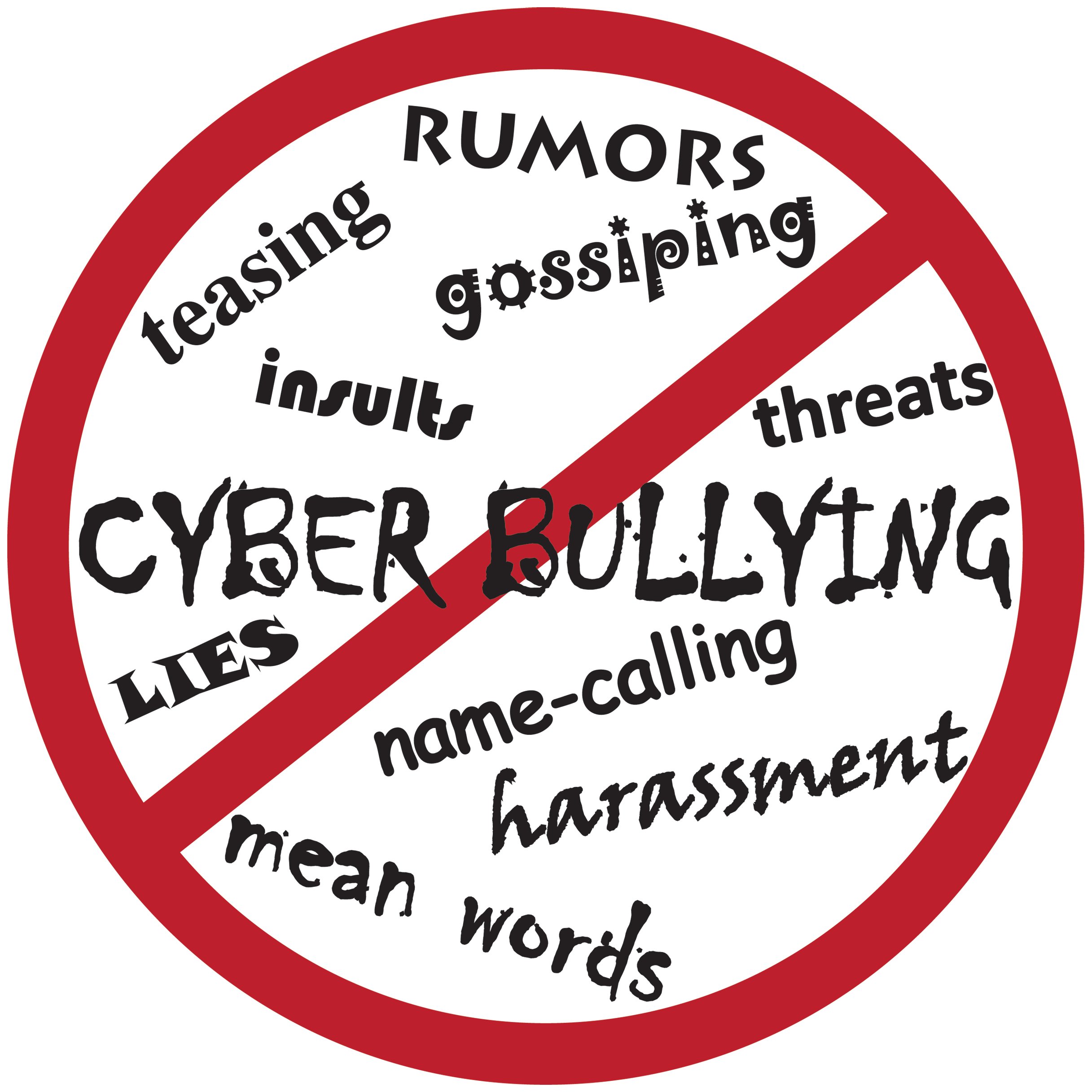
49% of LGBTQA+ students have experienced cyberbullying. (GLAAD)

35% of those effected are cyberbullied in the form of online threats (Bullying Statistics)

33% report sexual harrassment online, which is over 4 times as much as non-LGBTQA+ youth. (GLSEN)

...or online...


Becky Baker and Adam Torres from Degrassi, while telling Becky's father that she is going to continue dating Adam even though her family does not approve of him being transgender.
Photo Credit: Degrassi Wiki

Half of LGBTQA+ youth live in an unsafe, unaccepting environment. (PFLAG)


Nearly 30% get kicked out by their parents or guardians after coming out. (PFLAG)

Half of homeless youth identify somewhere within the LGBTQA+ communities. (PFLAG)

Nearly half of transgender people report a family breakdown after coming out (Stop Our Silence)...

...nearly 40% have family who will not speak to them since they began transitioning. (Stop Our Silence)

...or at home...


Photo Credit: Aricka Flowers

As high as 43% of LGBTQA+ people have experienced discrimination at their place of work (American Progress)...


... 40% have been verbally or physically harassed for their sexuality (American Progress)...

...and 90% because of their gender identity (American Progress).

Over 15% of LGBTQA+ adults have been terminated from their jobs due to their sexuality or gender identity. (American Progress)

...or at work...

90% of gay or bisexual cisgender males say they're often harassed or made to feel unwelcome in any public setting. (Stop Street Harassment)


Over 46,000 LGBTQA+ people avoid being out in public because they fear street harassment. (Stop Street Harassment).

Photo Credit: Chuck McFadden

Almost 50% of transgender people will not use public restrooms out of fear. (Stop Our Silence)

...and that's still not the last of it...


Photo Credit: Keithrtrottier

LGBTQA+ teens are three times more likely attempt to take their own lives than non-LGBTQA+ teens. (Stop Bullying)


When living with an unaccepting family, LGBTQA+ youth are eight times more likely to commit suicide. (Make Beats Not Beat Downs)

A third of youth suicide attempts are because of a sexual identity crisis. (Make Beats Not Beat Downs)

They say a trans-woman is murdered at least every 29 hours, and trans-women of color are especially frequent victims. (Planet Transgender)


Over half of transgender individuals  seek help for depression or anxiety (Stop Our Silence)...

...as well as 42% of LGB individuals (Stop Our Silence)...

...as opposed to 29% of straight and cisgender individuals (Stop Our Silence)...

...yet 41% of these LGBT people say they were not treated well when they sought help. (Stop Our Silence

Both asexuals, non-binary people and bisexuals are often told their sexuality or gender identity is "just a phase", "unnatural", they're "confused" or "doesn't exist" (Gay Star News) ...

...and asexuals are often invalidated with "You're just a late bloomer". (Gay Star News)

In fact, if you go to type in "non-binary bullying" or "asexual bullying" into Google, the recommended search result is "non-binary/asexual bullsh*t". (I found this one out on my own)

Photo Credit: Amygdala

Gender neutral pronouns such as they/them/their, xe/xem/xyr, ze/zir/zes are often called "improper", "ridiculous", or "made up". (Everyday Feminism)

--------------------------------------------------------------------------------------------------------------------------


Gender Identity: A person's personal perception of their own gender

Sexuality/Sexual Identity: A person's sexual orientation, preference, or capacity for sexual feelings


Sexual Expression: The way a person presents themself as a sexual being; sometimes wrongfully thought to be visible by actions, words, voice, clothing, etc.


Gender Expression: The way a person externally presents their gender identity, or concept of masculinity vs. femininity.


LGBTQA+: Lesbian, gay, bisexual, transgender, queer, questioning, asexual, plus


Coming Out: "Coming out of the closet"; when someone tells another or many others that they are LGBTQA+


Transitioning: Typically thought of as the time when someone stops identifying as the sex they were assigned at birth and starts identifying with their gender identity; may or may not include hormones, surgeries, etc.; can mean something different to every transgender person


Gay: Someone who identifies as male and is sexually attracted to other males, or an umbrella term for anyone who is sexually attracted to their own sex


Bisexual: Someone who is sexually attracted to both males and females


Transgender: Someone whose gender identity does not align with the sex they were assigned at birth


Trans-woman: A transgender woman, also called as MtF (Male to Female)


Straight: Someone who is attracted to the opposite gender


Cisgender: Someone whose sex assigned at birth aligns with their gender identity


Asexual: Someone who does not desire or experience sexual attraction


Non-Binary: A gender that is not specifically male or female


Gender Neutral Pronouns: Pronouns applicable to any or all genders


Wednesday, September 23, 2015

But Wait - Isn't "Queer" Offensive?


If you read my last post about the Huffington Post article on being genderqueer, or the post before that on LGBTQA+ representation on YouTube  - you may be asking yourself this. 


It originally translates to "strange" or "odd", which is why it got donned as a slur towards the LGBTQA+ community (specifically homosexuals and those who are not cisgender) in the early 19th century when acceptance rates were certainly not how they are today. The term "queer" was once a term frowned upon and rejected by those in the LGBTQA+ community.

So what changed?

Nowadays, we see "queer" plastered all over the LGBTQA+ community. Queer spaces, queer studies...queer and genderqueer have even been claimed as non-binary identities. It is even often used as an umbrella term in place of the "LGBTQA+" acronym that represents the entire group.

The reclamation of "queer" to mean something that is no longer offensive to the LGBTQA+ community is a pretty divided subject.


On one hand, we have those who are all for reclamation of the word as an in-group term. 
Think of it like how certain words are offensive to people of color, unless used by people of color.
Some find the word queer to be empowering by those in the LGBTQA+ community, or feel it is a term that accurately represents how they identify because it abolishes other labels.

But on the other hand, we have those who still see it just as it started: as a slur.
Some people are still very offended by it, and don't think it is right for some to claim it as an identity.
They also often believe that if those in the LGBTQA+ community use it, that is only encouraging those outside of that group to continue using it with its original offensive connotation.

So in conclusion, the implications of the word queer really depend on a person-to-person basis.

Got More Gender Queer-ies? 
Check out this video by YouTuber Ashley Mardell for some more info on queer identities!


or this article "Queer 101: Identity, Inclusion, and Resources" by the Unitarian Universalist Association"!


--------------------------------------------------------------------------------------------------------------------------

LGBTQA+: Lesbian, Gay, Bisexual, Transgender, Queer/Questioning, Asexual, +

Homosexual: A person who is sexually attracted to those of the same gender

Cisgender: Someone whose biological sex aligns with their gender identity

Queer: An in-group term sometimes used to refer to the entire LGBTQA+ community, or certain people in the community who define themselves this way

Genderqueer: Someone who does not identify with a single, exclusively masculine or feminine gender identity

Non-Binary: Any gender identity that is not specifically male or female


Sunday, September 13, 2015

These ARE Real Words!


This one's for everyone out there who has ever been told their identity "is not real". The online resource for the Oxford English Dictionary has added a whole bunch of trans-related terms to its collection!


Photo credit also by Life Outside the Binary.


Tuesday, September 8, 2015

Transgender Teens Address Their Future Selves


The following is a recap from an article done by author, editor, and staff writer Julie Zeilinger for an online news company called Mic. This article, titled "Transgender Teens Share Inspiring and Heartbreaking Hopes for their Future Selves" discusses a video by Mashable in which a group of transgender youth of all sorts address themselves 10  years in the future with some words on where they hope to be by then. Such as:

"Do what makes you happy."

"I really hope you found a job and a place to stay."

"I hope that your father has come around and is very, very supportive of you."

"Will you ever get there? To the point where you're real in everywhere - in the hearts of your parents, in the hearts of yourself."

"I hope that you can look in the mirror and finally be happy with who you are, and have people who are happy with who you are too."

"Just believe in yourself."


Julie wrote, "Figures like Laverne Cox, Janet Mock, and Caitlyn Jenner have made many great strides for transgender visibility, but what has arguably been less visible is the rocky road that brought them to their trans adulthood. That growth is an experience Mashable has attempted to capture in a new video and series of profiles of transgender teens sharing their hopes and experiences for their future selves...

...Many of their dreams are those held by teens of all gender identities...But their hopes are also exceedingly practical, grounded in a reality that is probably distinct from that of most cisgender teens."

Click here to read the rest of Julie's article.

...and check out the full video by Mashable here
Warning: It's a tear jerker

Bless these kids!
--------------------------------------------------------------------------------------------------------------------------

Transgender: Someone whose biological sex does not align with their gender identity.

Gender Identity: A persons personal perception of their own gender.

Cisgender: Someone whose biological sex does align with their gender identity.